

Everest Base Camp
Journey at a Glance
Departure: 21st May, 2024 — Kolkata, West Bengal, India
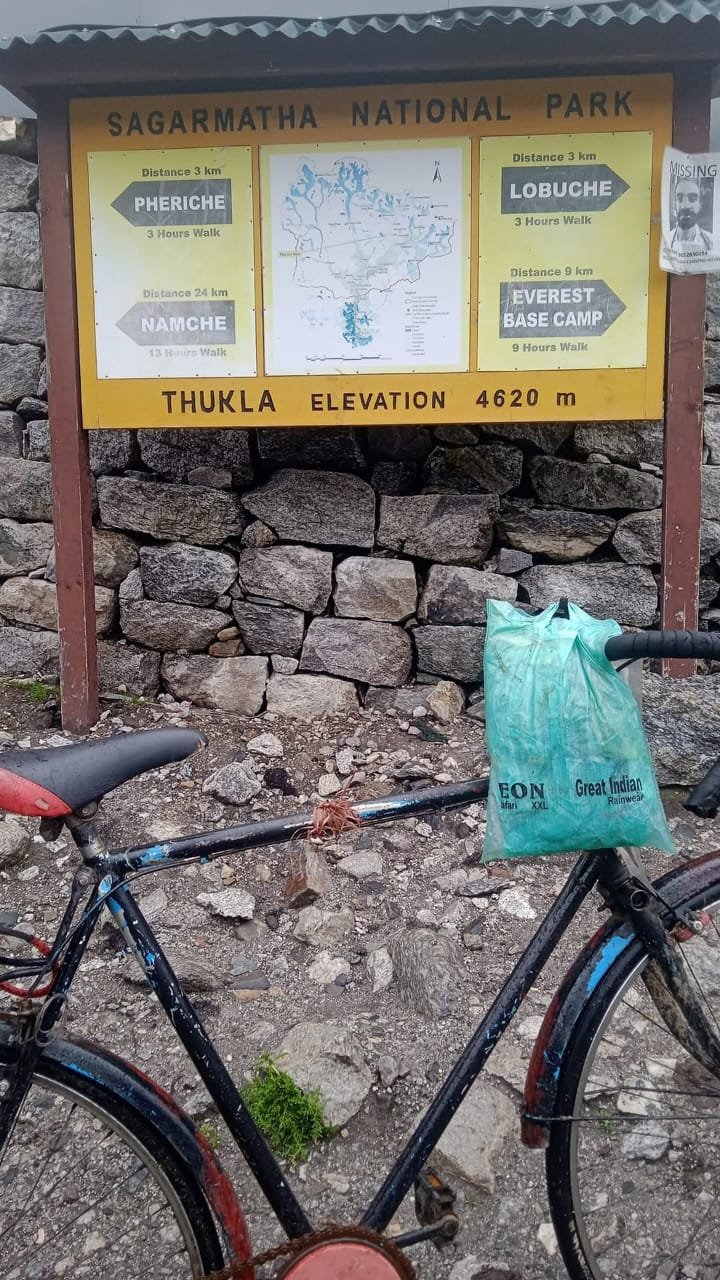
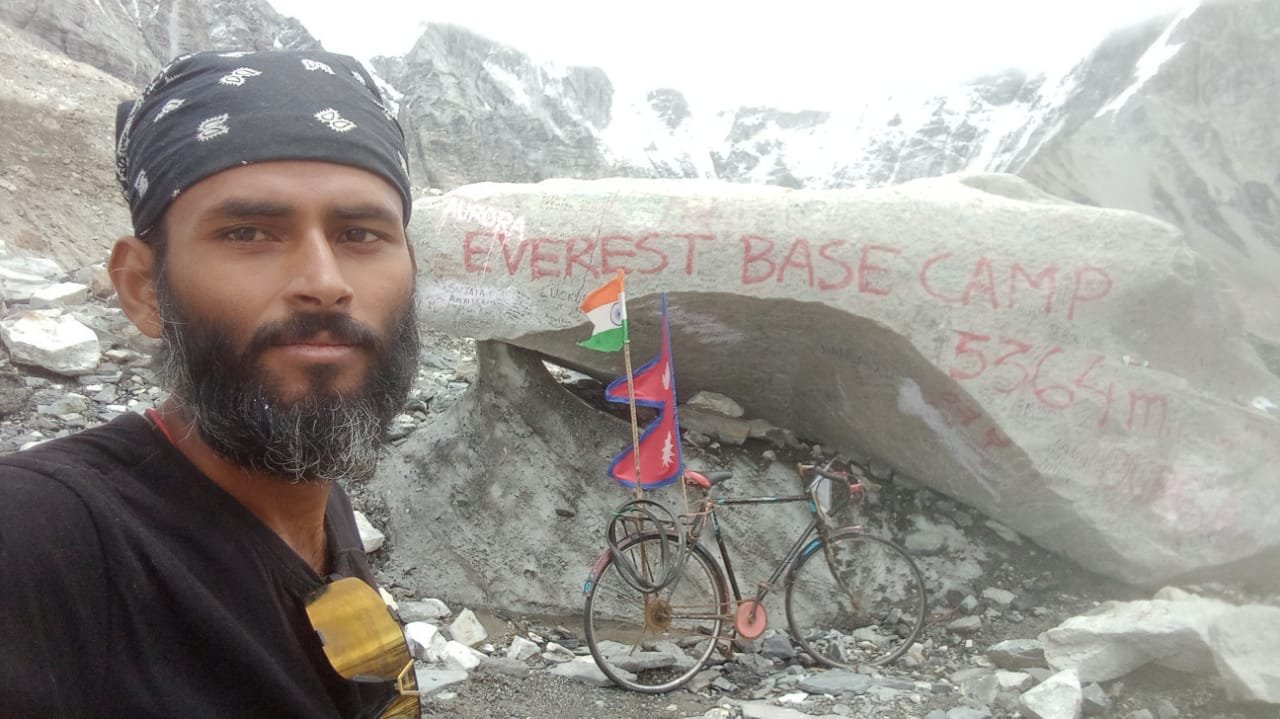
Arrival at EBC: 14th July, 2024 — Everest Base Camp, Nepal
Total Distance: Approximately 1,700 kilometres
Duration: 54 days
Altitude Reached: 5,364 metres above sea level
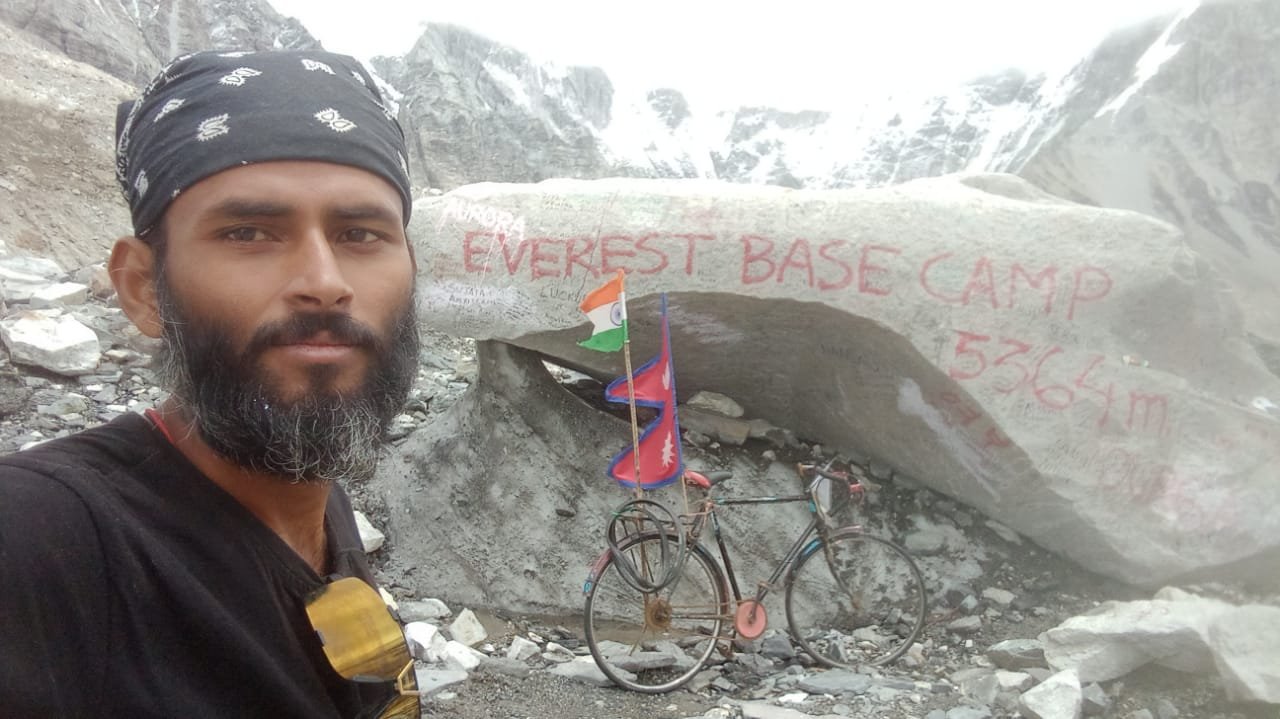
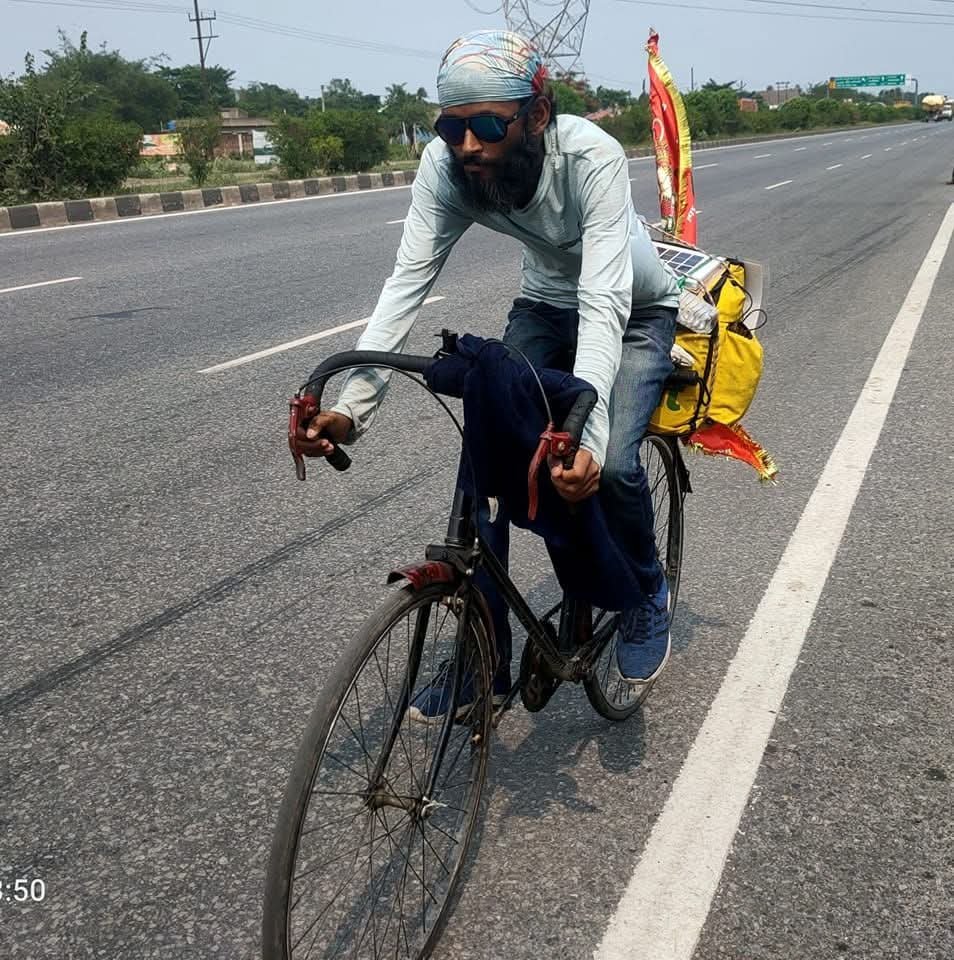
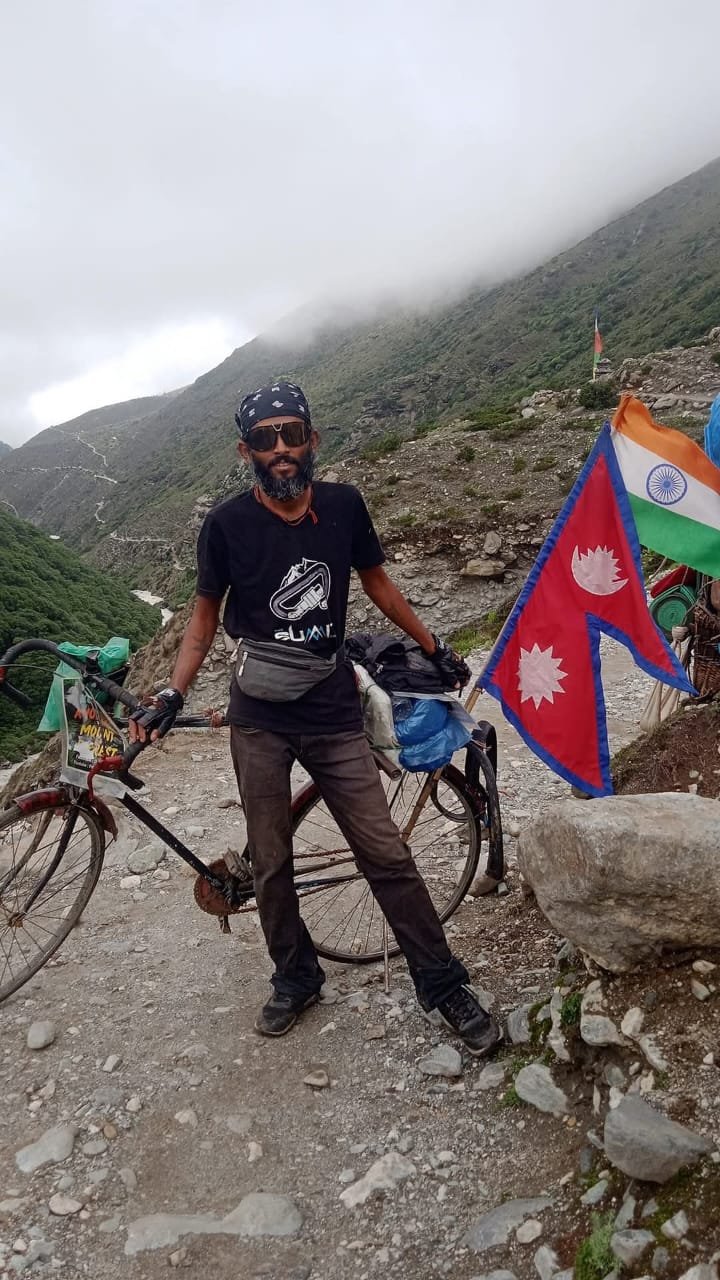
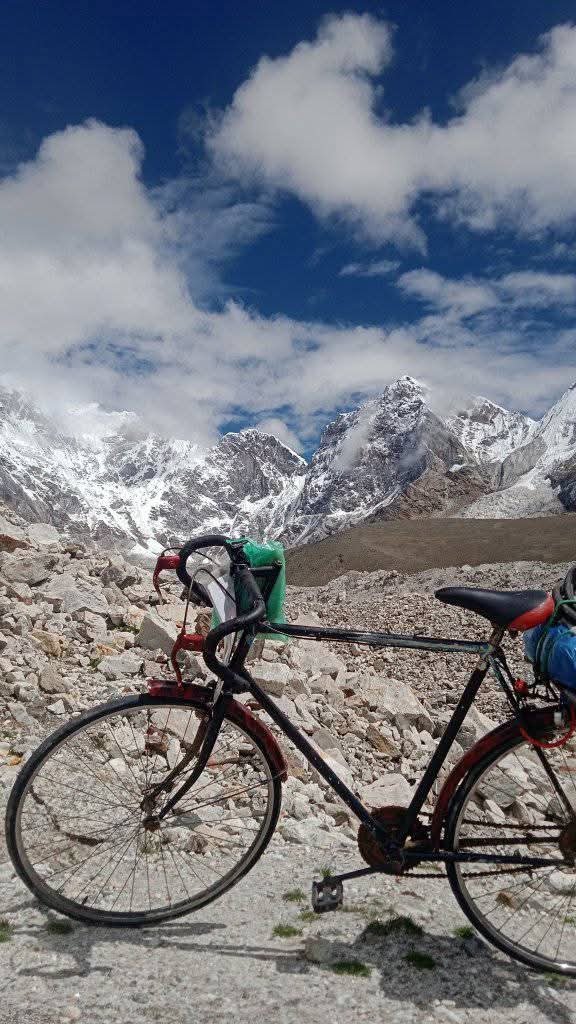
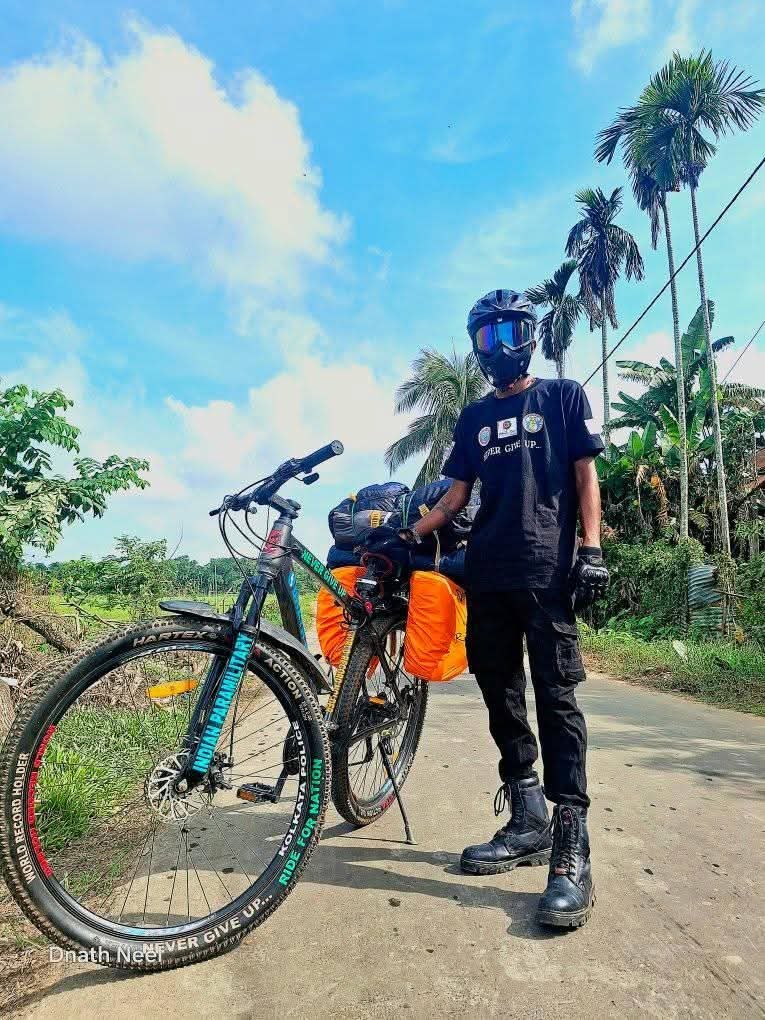
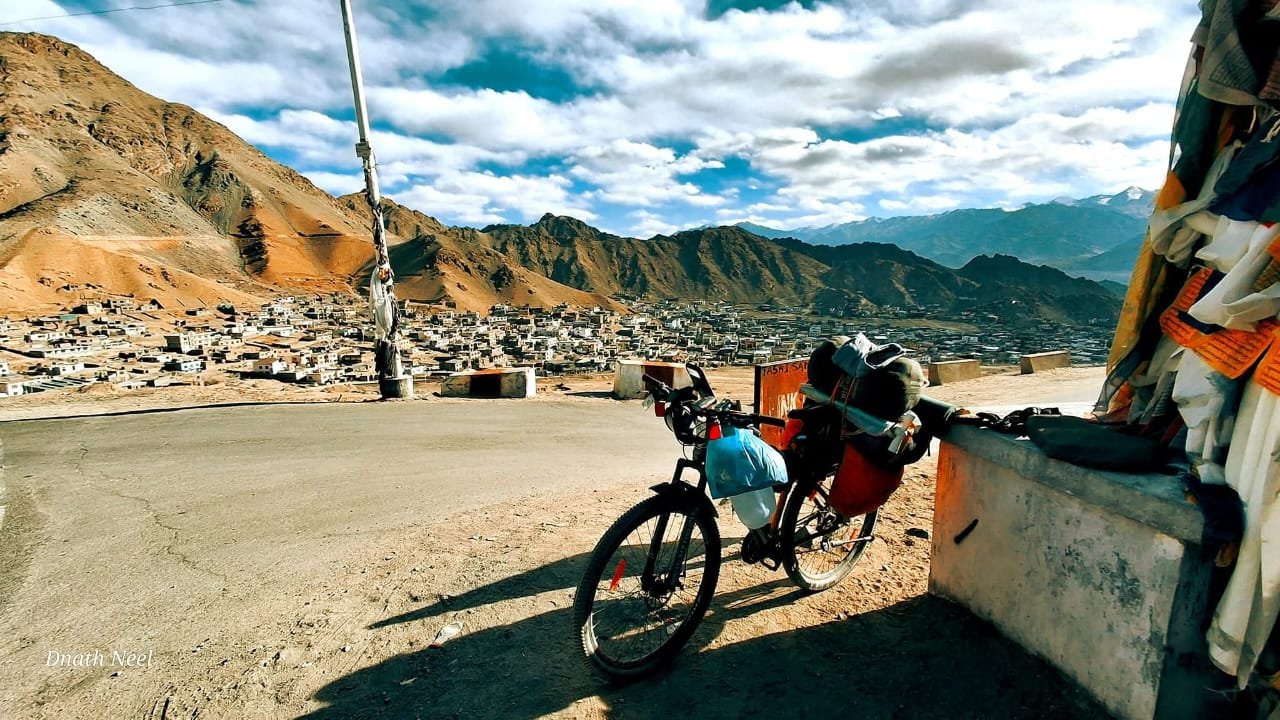
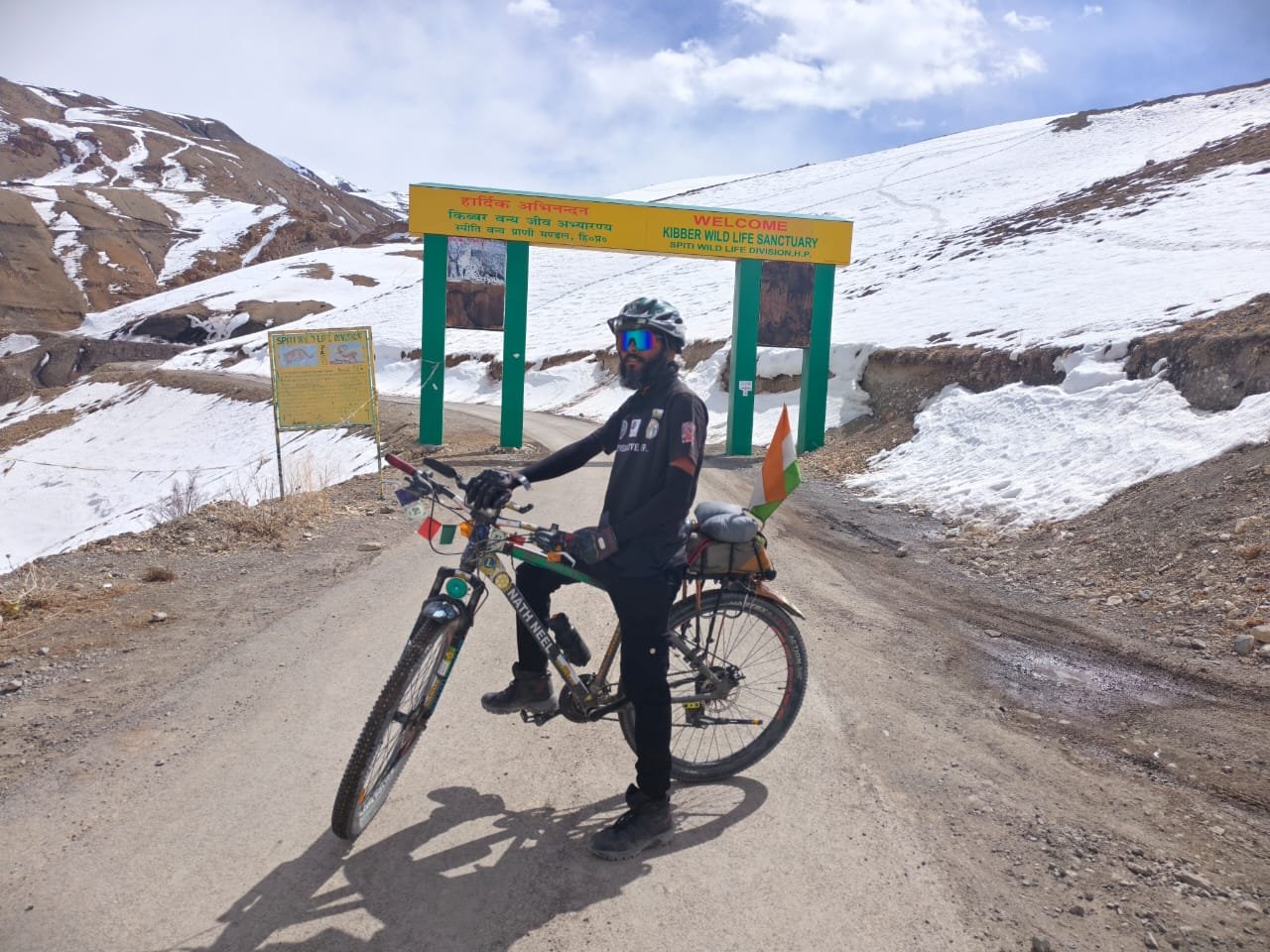
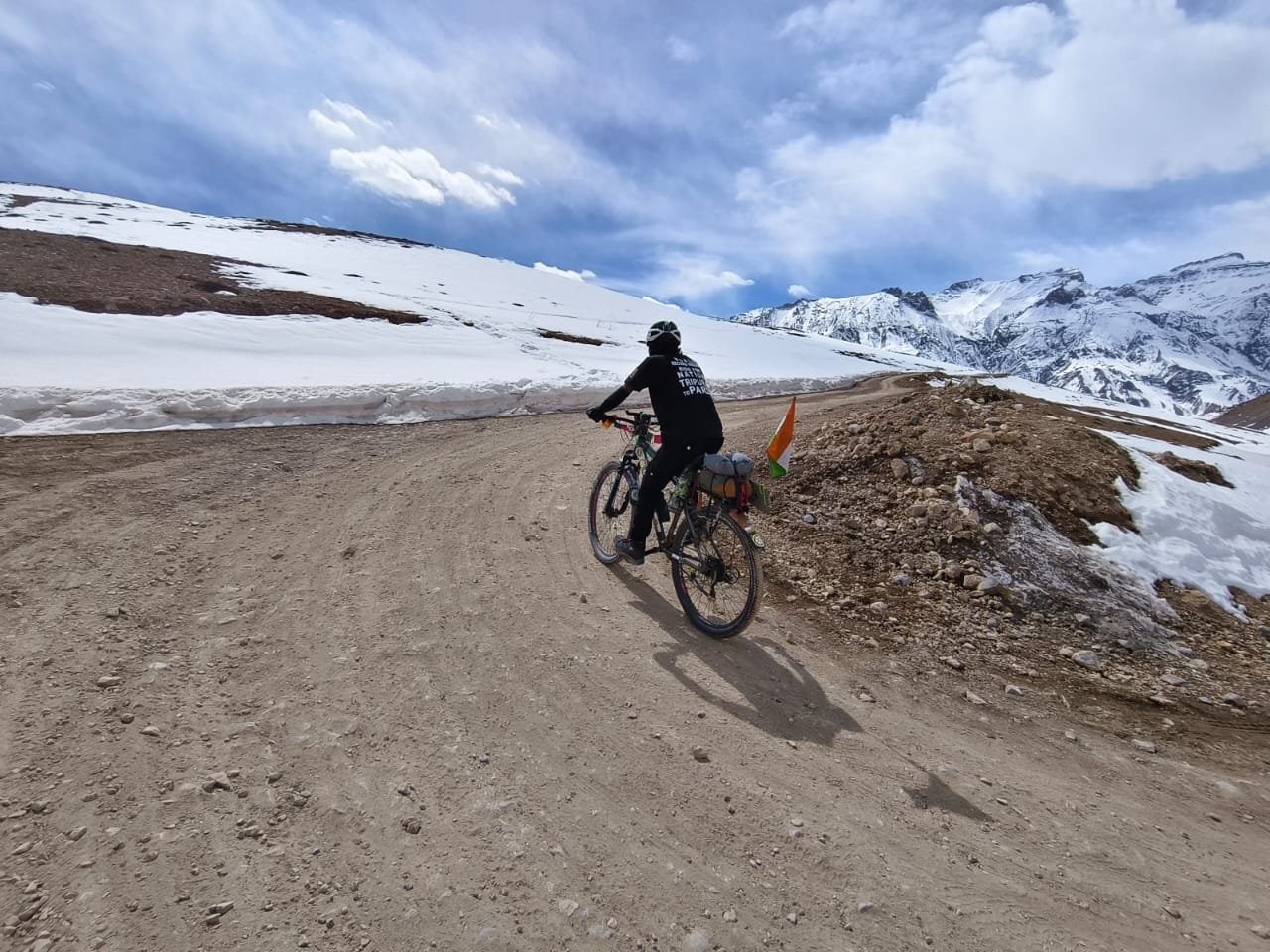
The 21st of May, 2024 began like any other morning in the ever-bustling city of Kolkata — until the quiet of dawn was broken by the soft, rhythmic turning of bicycle wheels. With a heart full of courage and an unshakeable resolve, I placed my foot on the pedal of my bicycle, aptly named “Everest,” and set off towards the horizon.
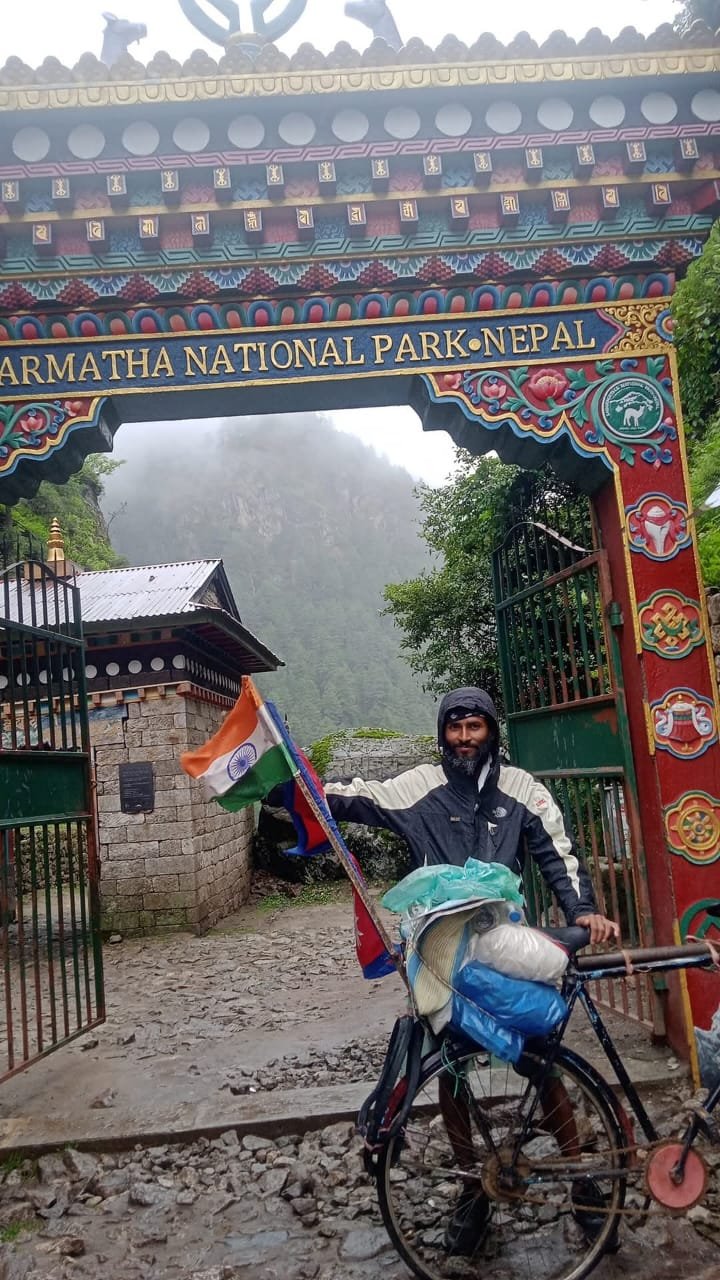
My destination was not a mere address on a map — it was a dream etched deep within my soul. The route stretched across Burdwan, Varanasi, Ayodhya, the Sonauli border crossing into Nepal, Kathmandu, Ghumti Bazaar, Saatri, Paya, Namche Bazaar, and finally, the legendary Everest Base Camp (EBC).
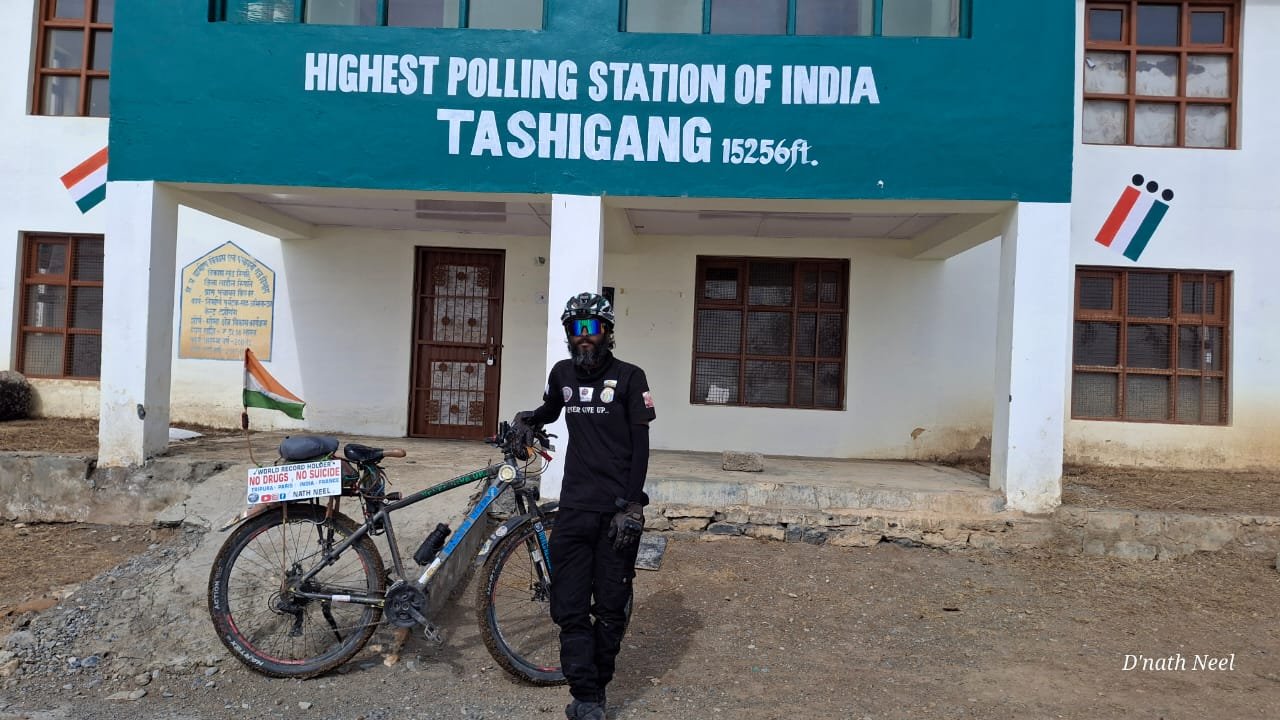
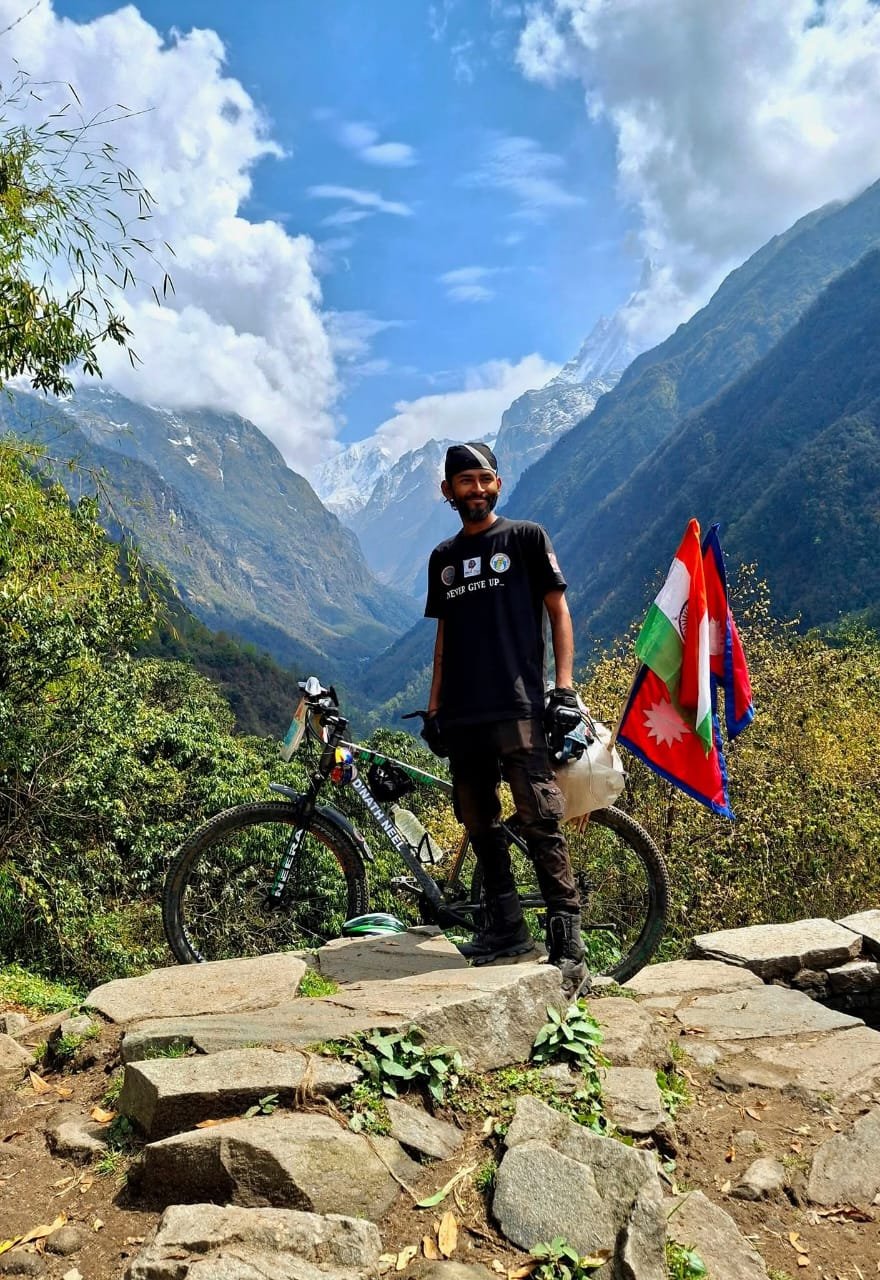
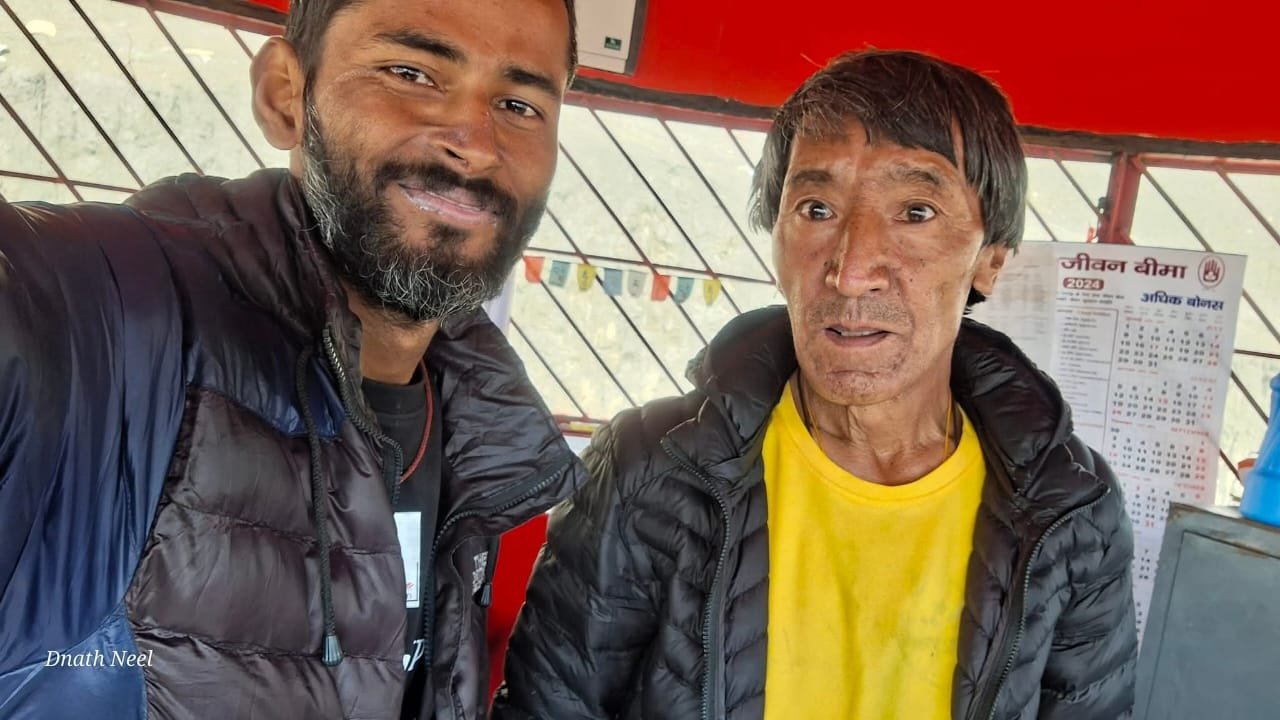
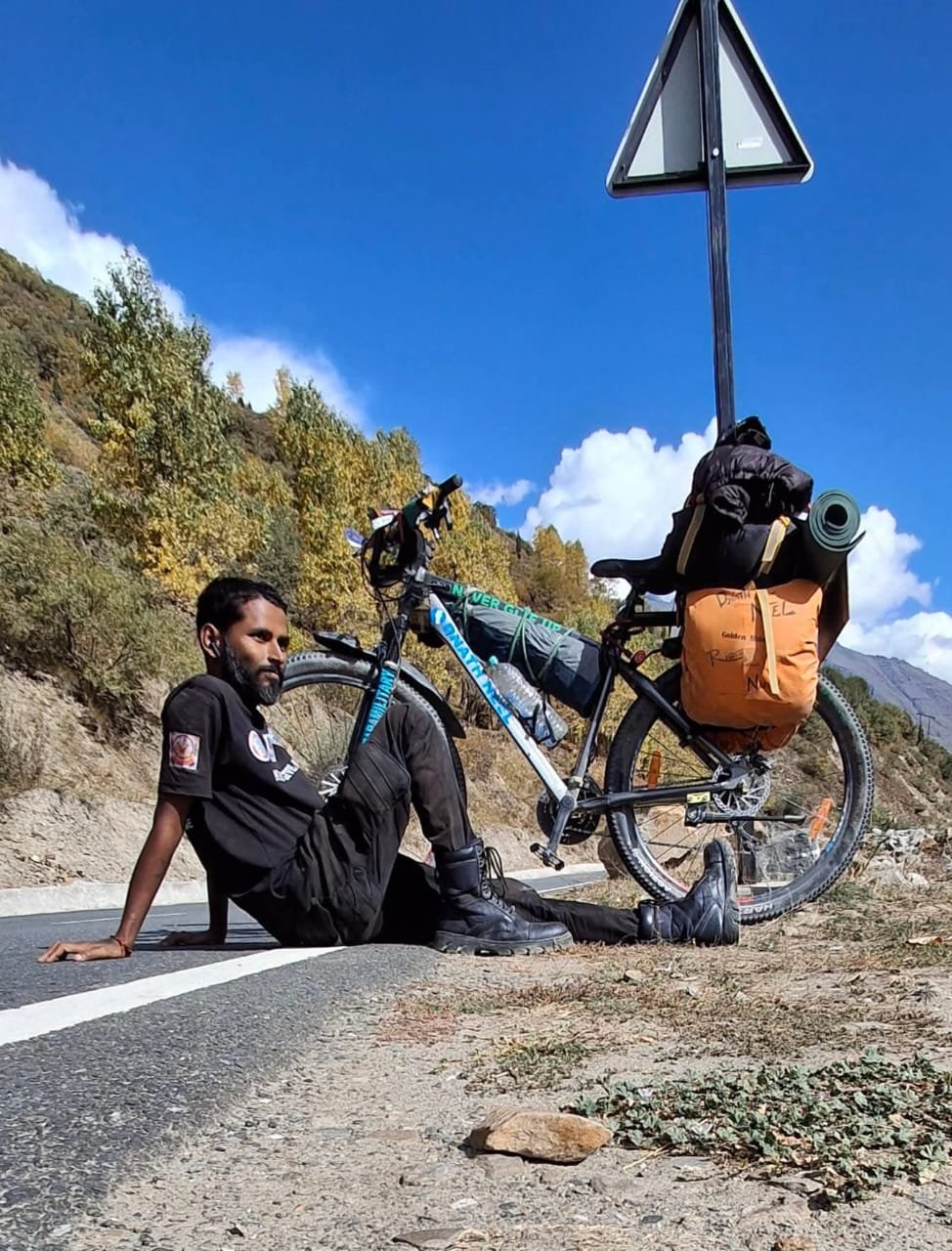
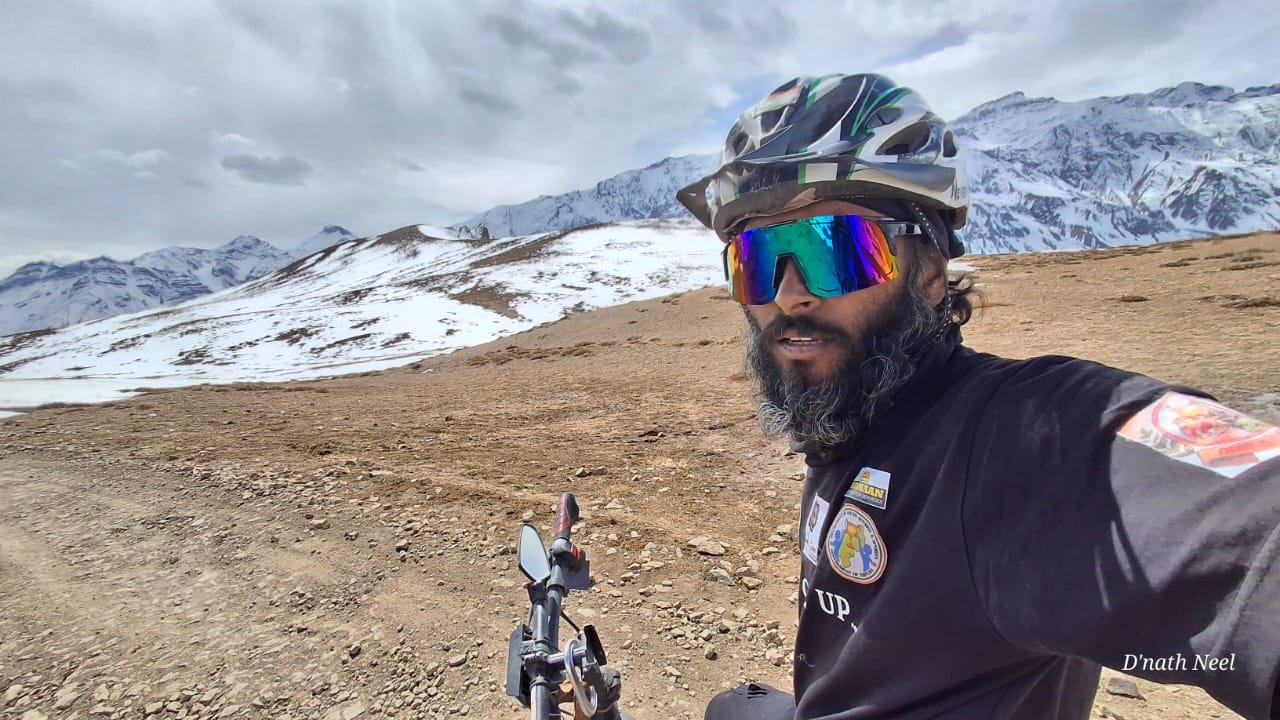
On the 14th of July, 2024, that dream became reality. I reached Everest Base Camp — and in doing so, etched my name in the pages of history as the first Bengali cyclist ever to accomplish this feat. I still find myself in disbelief — how did I do it? All I know is that I once dared to dream, and that dream carried me all the way to the threshold of the impossible.
“I once dared to dream, and that dream carried me to the doorstep of the impossible.”
The Road Begins: From Kolkata to Varanasi
The journey began quietly, much like any ordinary day — yet within me burned an extraordinary determination. As the wheels of my cycle turned slowly out of Kolkata, I began to realise almost immediately that this would not be an easy road.
Dust on the highways, relentless heat, and sporadic rain showers — the road tested me from the very first day. By the time I reached Burdwan, I understood that this journey was not merely a physical challenge; it was a deeply mental one as well. With every kilometre covered, it felt as though my body and mind were locked in a silent battle. But surrender was never an option.
From Burdwan, I rode onward to Varanasi. Upon arriving at the banks of the sacred River Ganges, I paused for a while, allowing the serenity of the holy waters to fill my soul. It was a brief but deeply meaningful moment of calm before the hardships ahead. Cycling through the crowded, sweltering lanes of Varanasi was an experience altogether different from anything I had imagined.
The Scorching Plains: Ayodhya and Uttar Pradesh
From Varanasi, I pressed on towards Ayodhya — a city steeped in history and spirituality. But the state of Uttar Pradesh had another kind of offering in store for me: its punishing summer heat.
The blazing sun, the vast stretches between petrol stations, and an acute shortage of drinking water combined to make this leg of the journey an ordeal of endurance. While the thermometer read around 42 degrees Celsius, my body was experiencing something closer to 46 or 47 degrees. Sweat poured relentlessly, and yet, a quiet voice within kept whispering, “Hold on just a little longer — your goal is near.”
It was during this gruelling stretch that I arrived at a profound realisation: the greatest challenge in any journey is not physical — it is mental. When the body grows weary, it is the mind that must stand firm. And it was this inner strength that continued to propel me forward.
Crossing into Nepal: Where the Mountains Begin
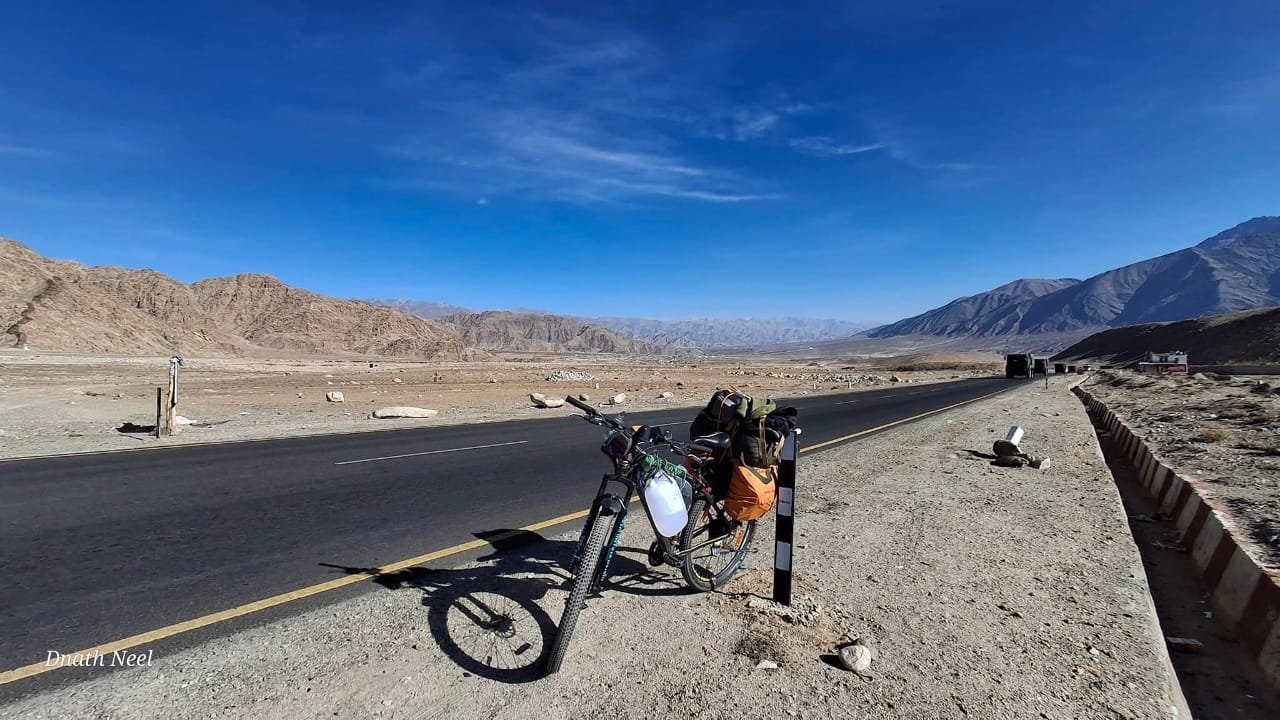
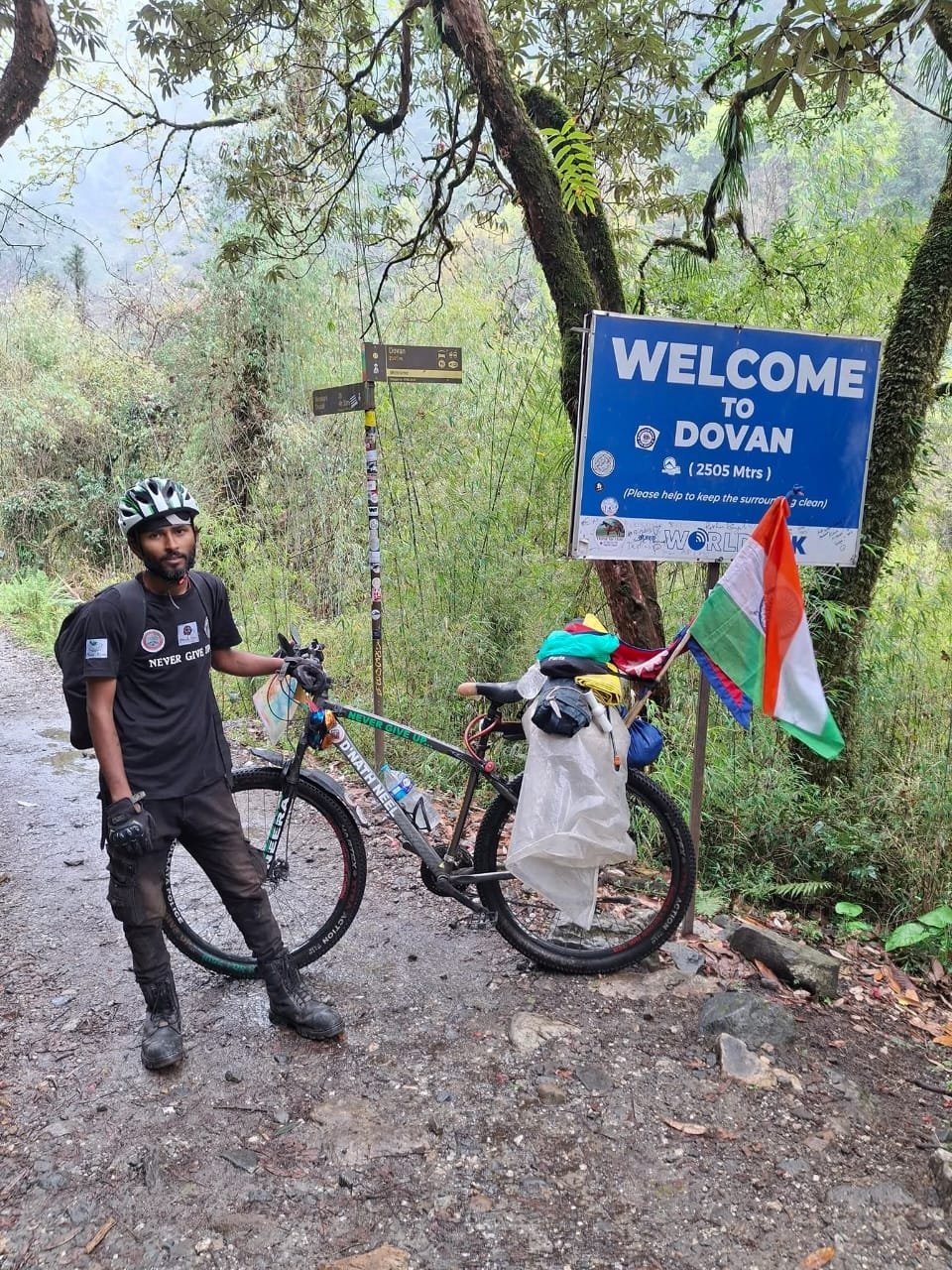
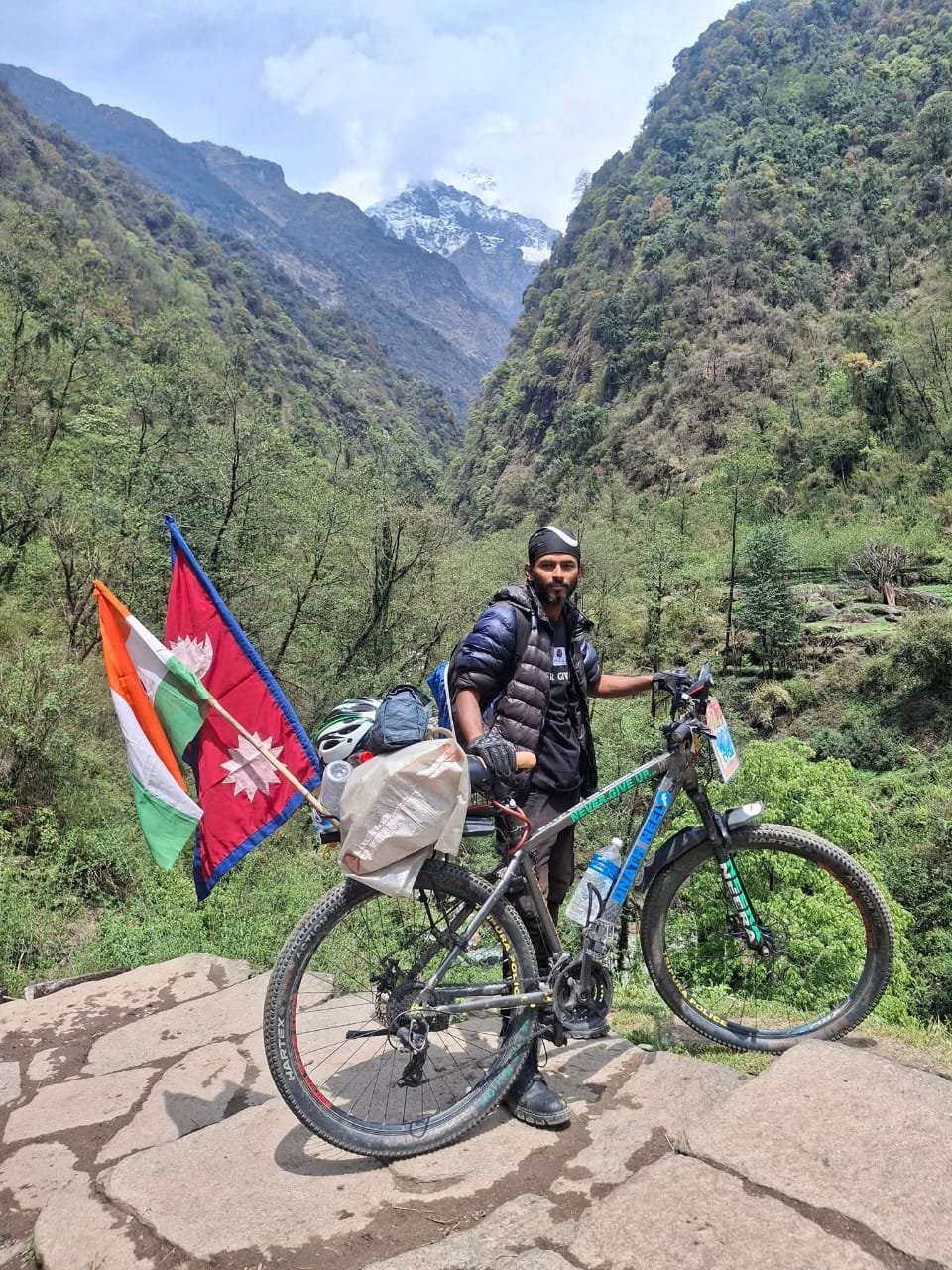
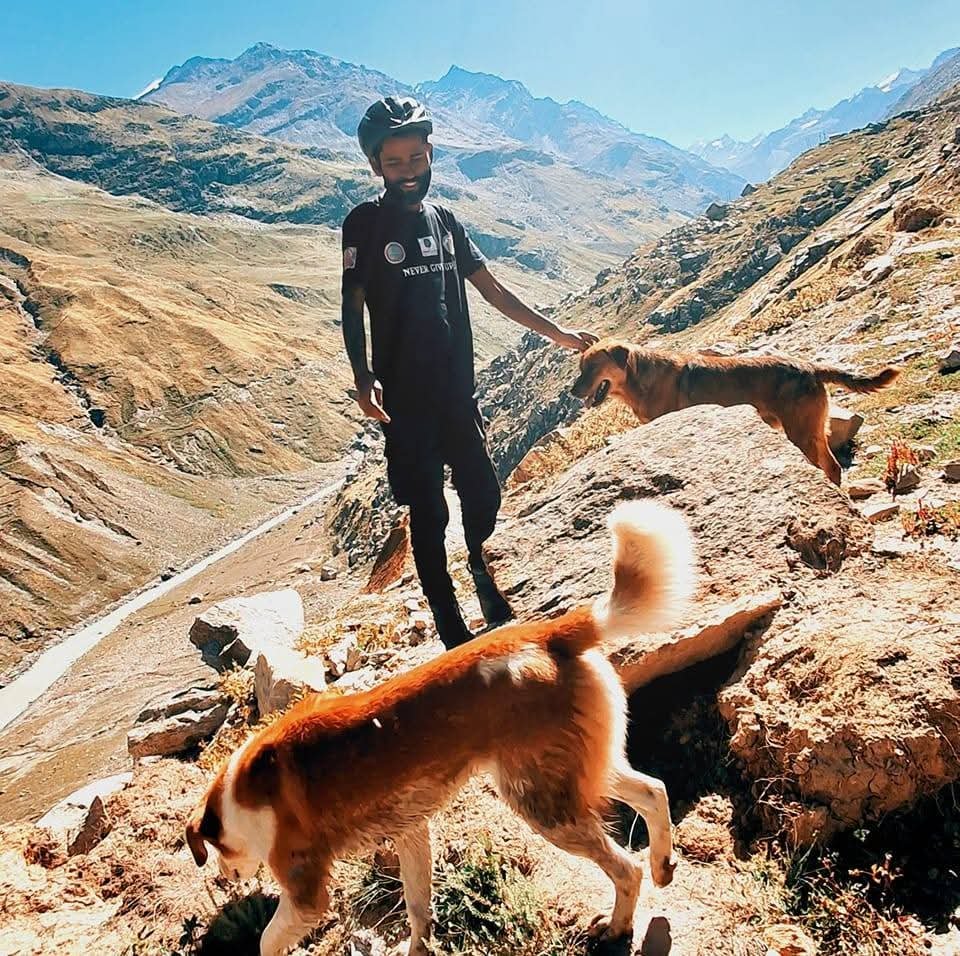
Crossing the Sonauli border, I stepped into Nepal and began what felt like the true mountain journey. From Birgunj onwards, the terrain transformed dramatically — winding mountain roads, narrow passes, and sudden bursts of rain accompanied me as I made my way towards Kathmandu.
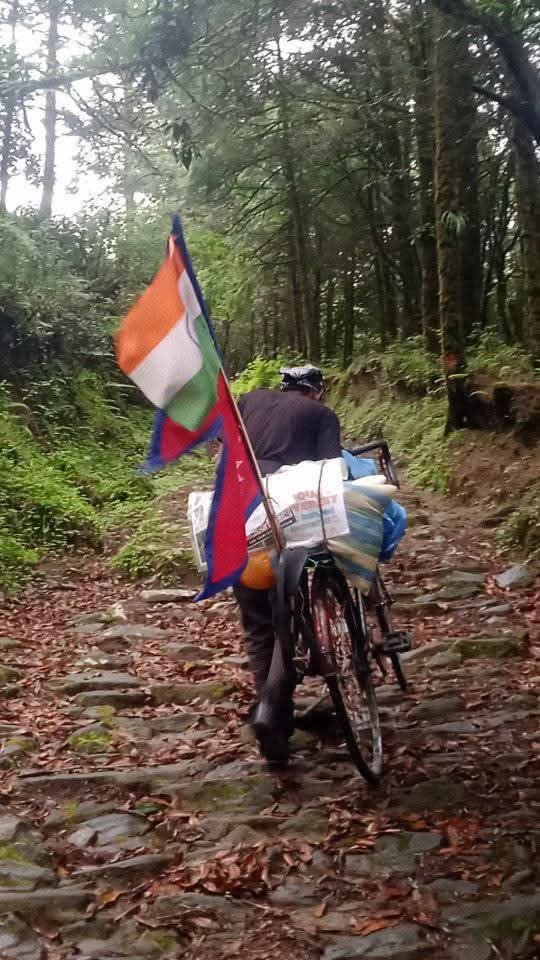
But the mountains were not welcoming at first. Not long after entering Nepal, a landslide blocked the road entirely, forcing me to carry my bicycle on foot for a considerable distance. My body was exhausted and my spirit was on the verge of breaking — but in that very moment, I reminded myself: this journey is not just for me. It is for my state, for my country, and for my late father. I picked myself up, got back on my bicycle, and rode on.
The Rains and the Rockslides: A Battle for Survival
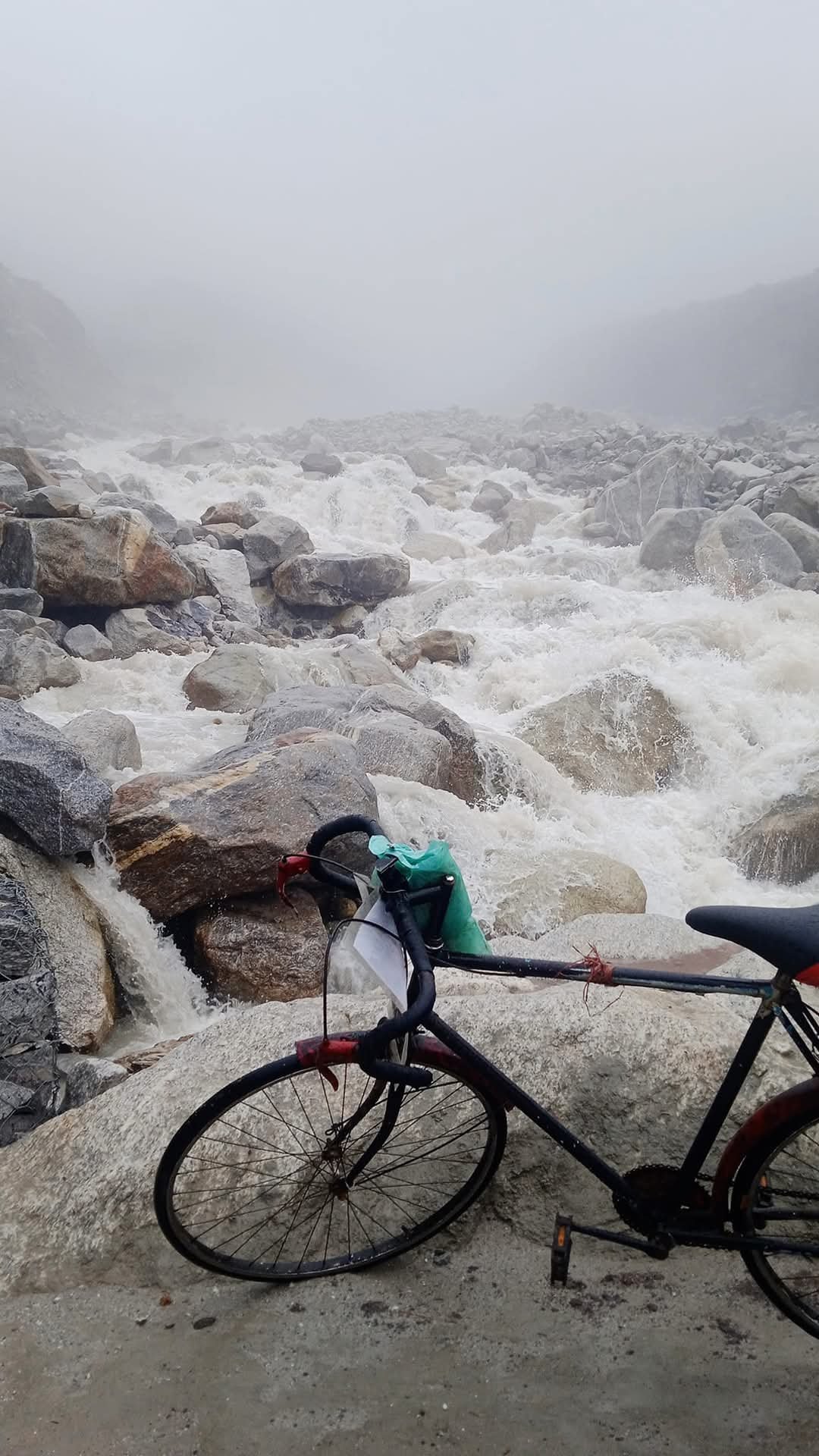
Beyond Ghumti Bazaar, the rains arrived — fierce, relentless mountain rains unlike anything I had ever encountered before. Streams of water clogged my wheels, the roads crumbled beneath me, and the shadow of death seemed to hover uncomfortably close. Yet I refused to stop.
Standing in the rain, I rallied every ounce of courage I had left and told myself, “You can do this. Do not give up.”
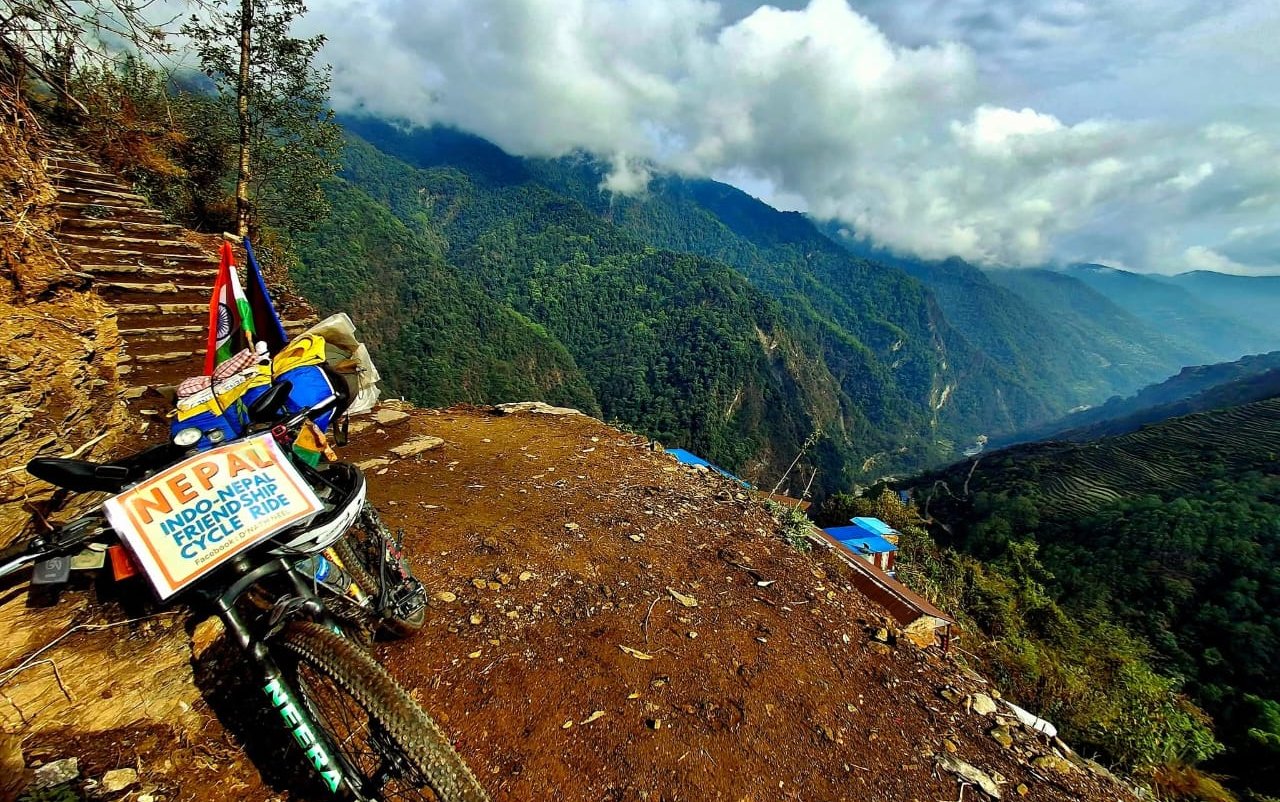
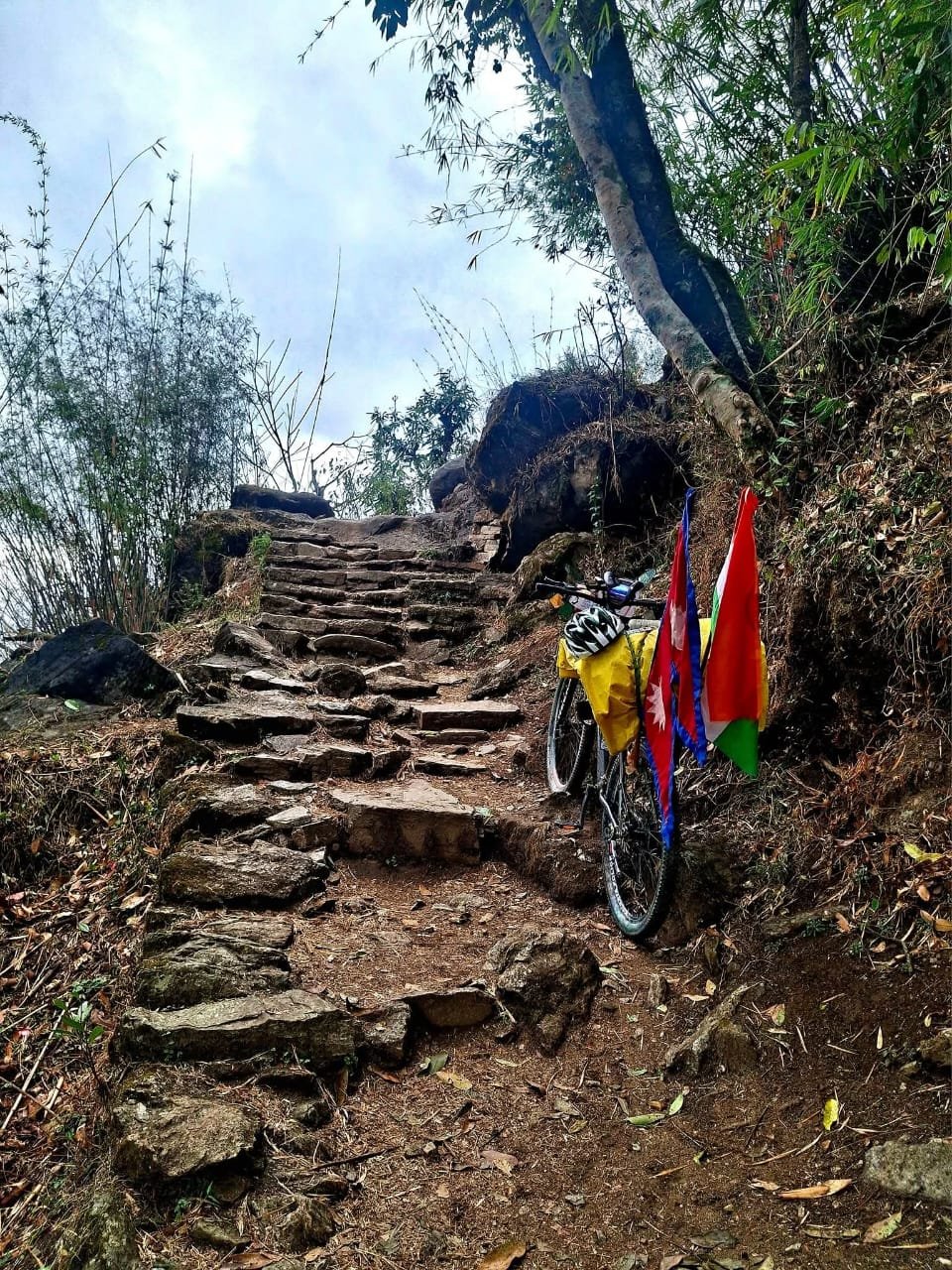
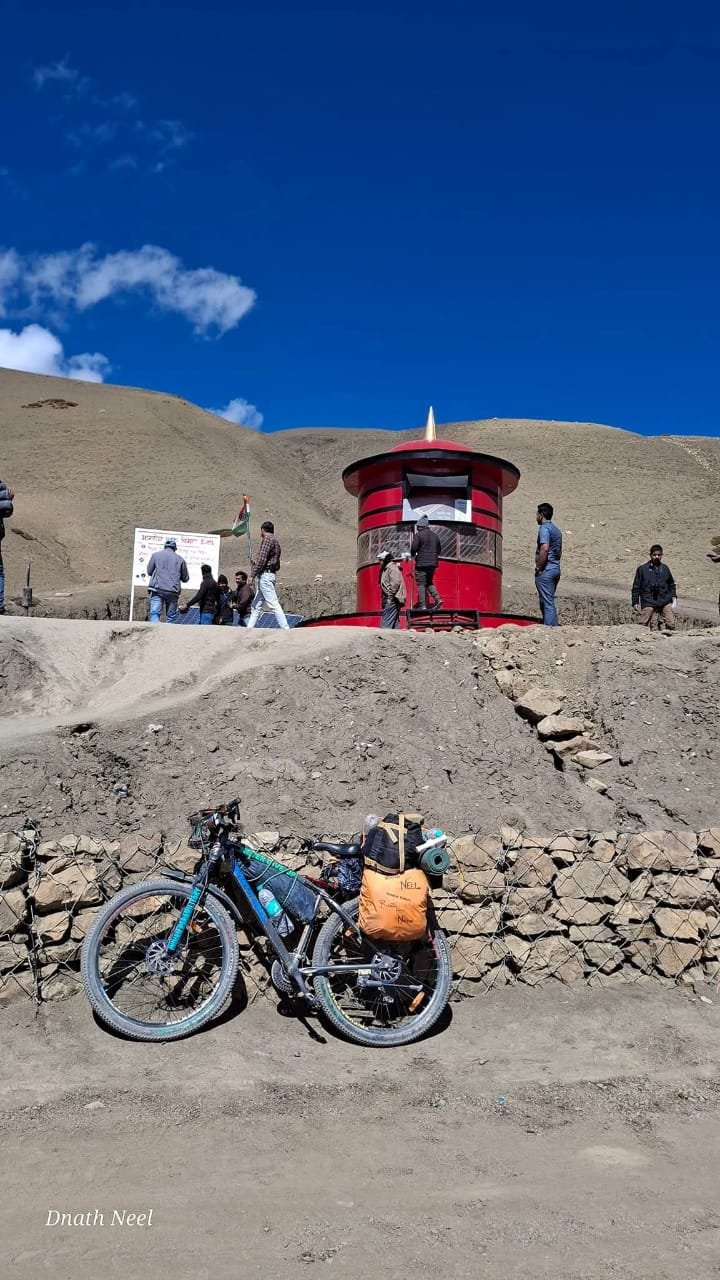
The ascent after Ghumti Bazaar was merciless — gradients of 60 to 70 degrees at stretches. Just before reaching Paya, another landslide struck without warning. My bicycle and I were both thrown to the ground. I fell to the left side of the road. It was only by the grace of God that I did not fall to the right — for on the right side lay a deep, unforgiving gorge. Several parts of my body were injured. In that moment, I truly believed the journey might be over.
But I refused to let it end that way. I slowly rose, steadied myself, climbed back onto my bicycle, and continued. That moment — surviving what could have been a fatal fall — became the most powerful lesson of my life: no matter how great the adversity, courage and determination can overcome it all.
“Every fall taught me that the road does not end where you stumble — it continues wherever you choose to rise.”
The Hardest Three Metres: Crossing to Namche Bazaar
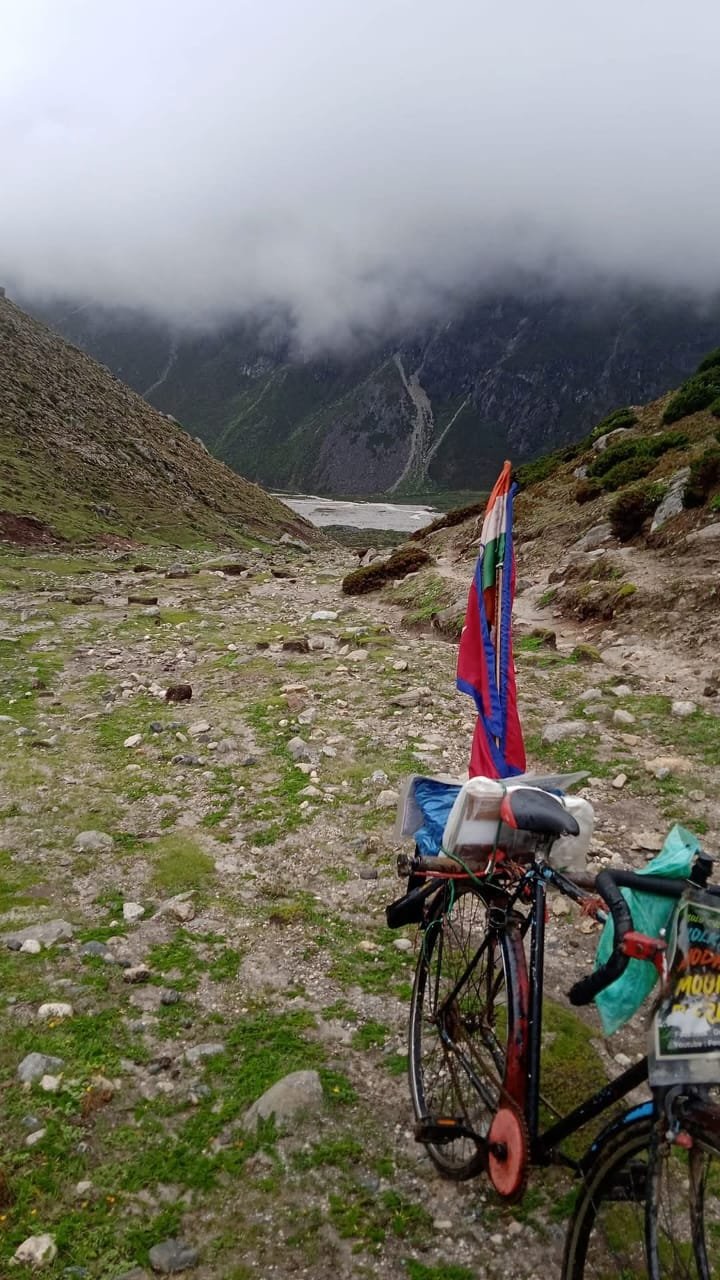
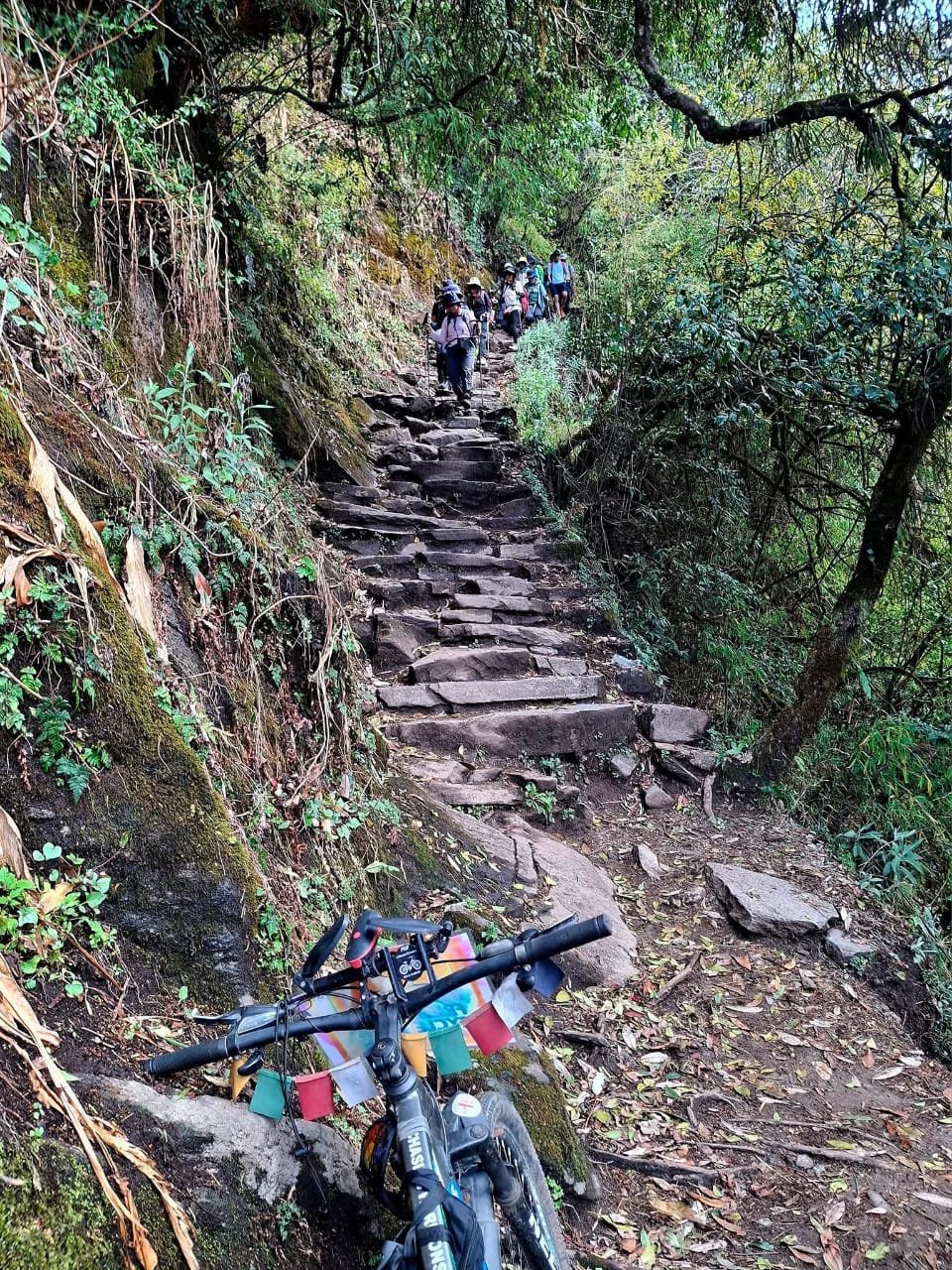
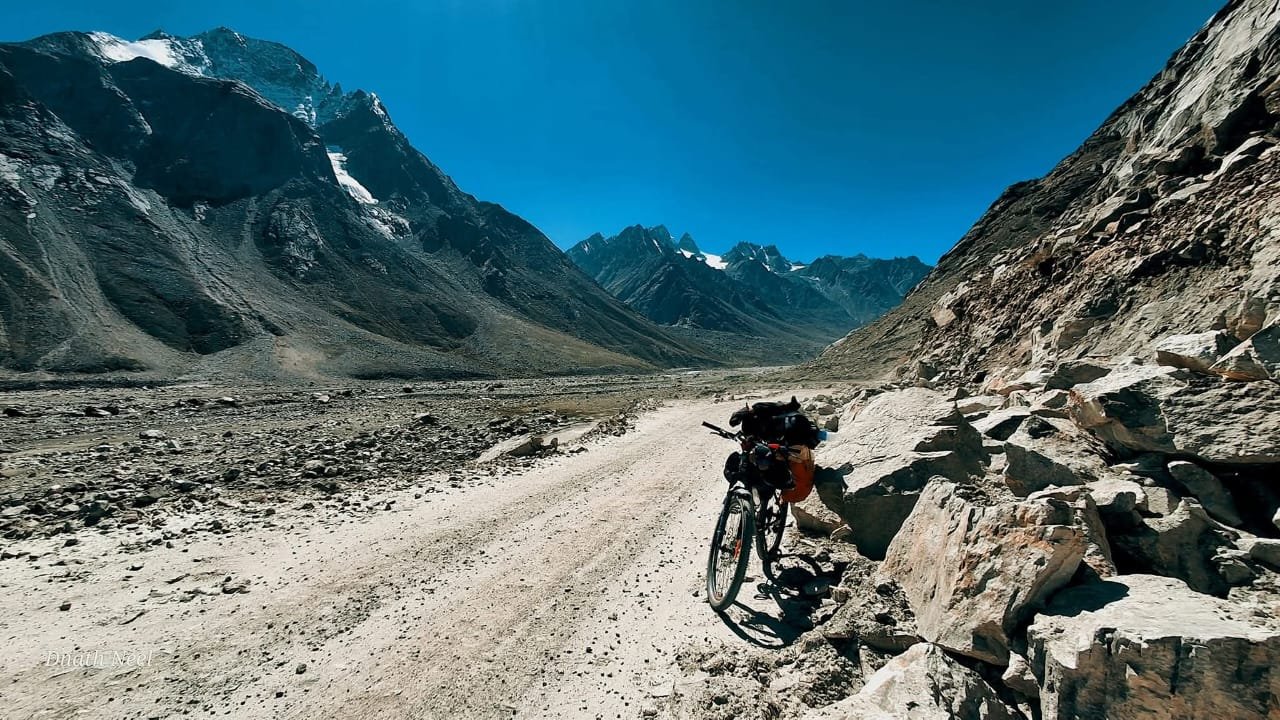
I will never forget standing at a point along the Paya mountain trail where a mere stretch of road — no more than three feet wide — had collapsed into a ravine. I stood there and wept. It took me four additional hours to find an alternative path through dense jungle just to cross that small gap.
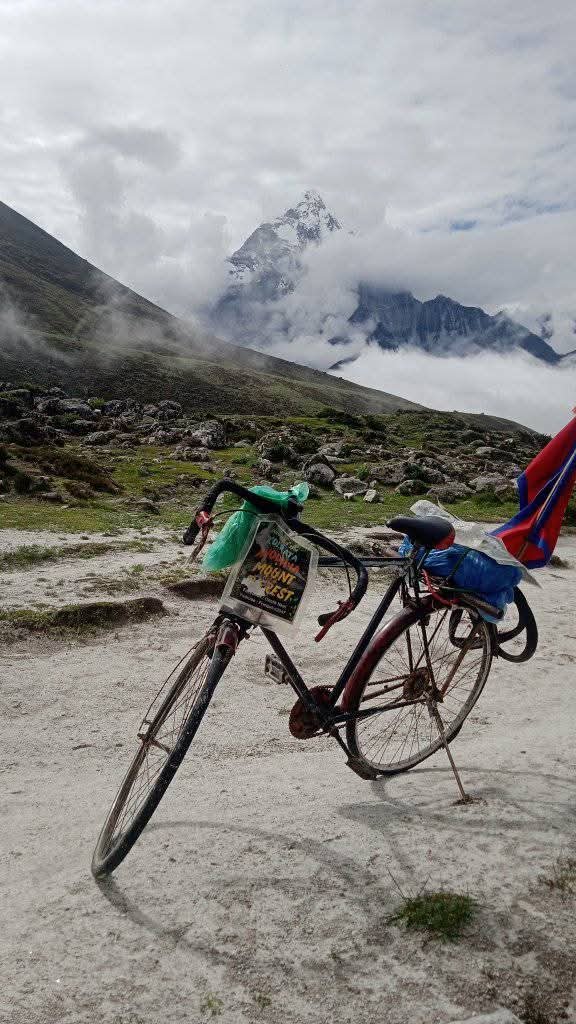
Upon reaching Namche Bazaar, I felt a brief, welcome relief. But what lay ahead — the Lobuche Pass — would strip away every last reserve of strength I possessed. At that altitude, every single breath felt like a struggle. The air was thin, and my lungs screamed for more oxygen with each step forward.
The Final Approach: One Last Night at Gorakshep
Arriving at Gorakshep in the late afternoon, I sat quietly and gazed into the distance at Everest Base Camp — so close, yet still a world away. I whispered to it, “I am coming for you tomorrow. We will meet.”
The following morning, I set out with a renewed sense of joy and anticipation. What I had not anticipated was that covering just three kilometres would take over three hours at that altitude — every step a monumental effort, every breath a conscious act of will.
14th July, 2024: The Summit of a Lifetime
On the 14th of July, 2024, I arrived at Everest Base Camp. The emotions that washed over me — joy, relief, triumph, and an overwhelming sense of gratitude — are beyond the power of words to describe. But more than the exhilaration of victory, what I carried in my heart was a profound life lesson.
Physical pain. Mental anguish. The fear of death. All of it woven together into one extraordinary experience. In that moment, standing at 5,364 metres above sea level, I remembered my father, bowed my head in gratitude to the Almighty, and understood that the greatest victory I had won was not over the mountain — it was over my own mind.
In completing this journey, I became the first Bengali cyclist in the world, the third Indian, and the eighth cyclist globally to reach Everest Base Camp — having covered approximately 2,100 kilometres in 54 days, passing through Varanasi, Ayodhya, the Sonauli border, Kathmandu, and Namche Bazaar to arrive at the South Base Camp of Mount Everest.
A Message to Those Who Are Ready to Give Up
Every single moment of this journey taught me something invaluable: giving up is not defeat — the real defeat is in never trying again. When the path grows difficult, that is precisely the moment to awaken the strength that lives within you.
I believe that the human spirit is the most powerful force in existence. This journey was not only mine — it belongs to every person who has suffered, every soul who has come to the edge of surrender. I wanted to prove that even in the darkest of times, if we refuse to give up, a new direction in life will reveal itself.
At the end of every darkness, light is waiting. Life is a journey, and every challenge along the way only makes us stronger. I share my story not to impress, but to inspire — to remind you that where there is courage and determination, nothing is truly impossible.
“Never Give Up.”
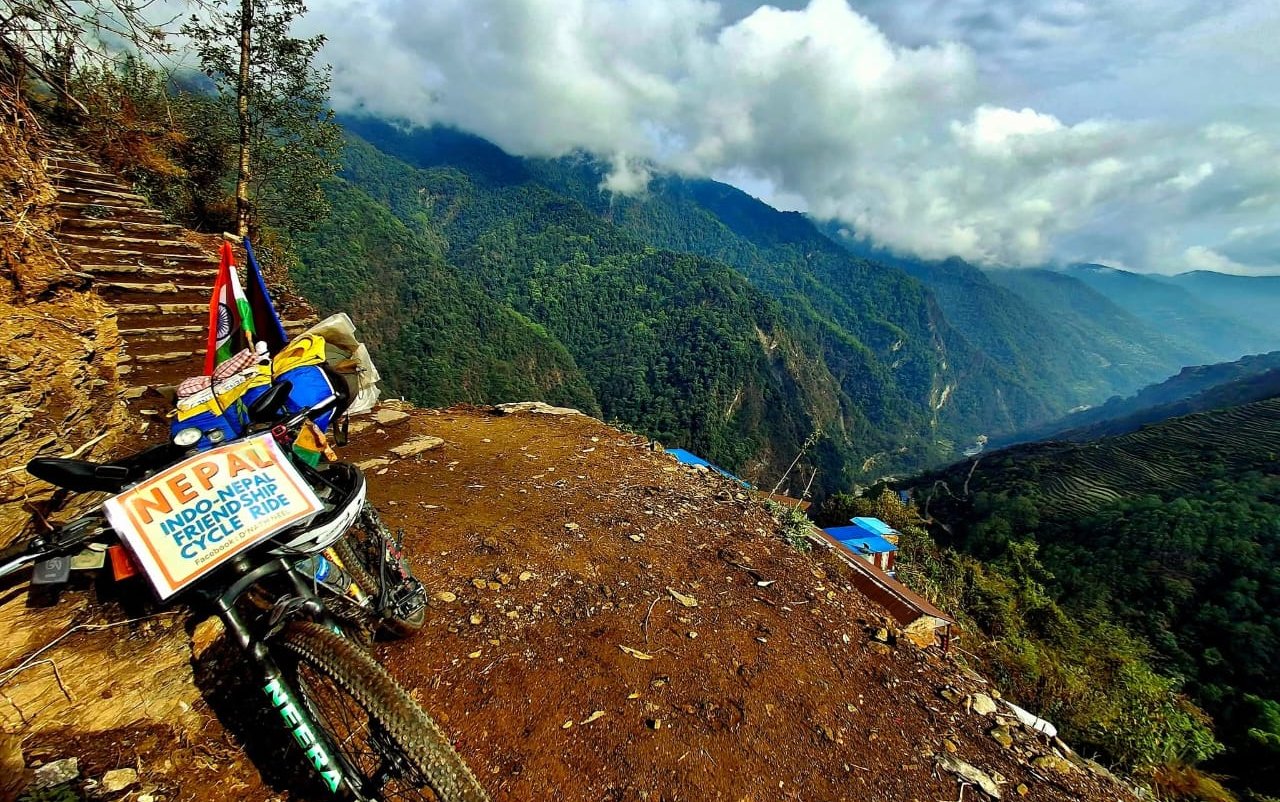
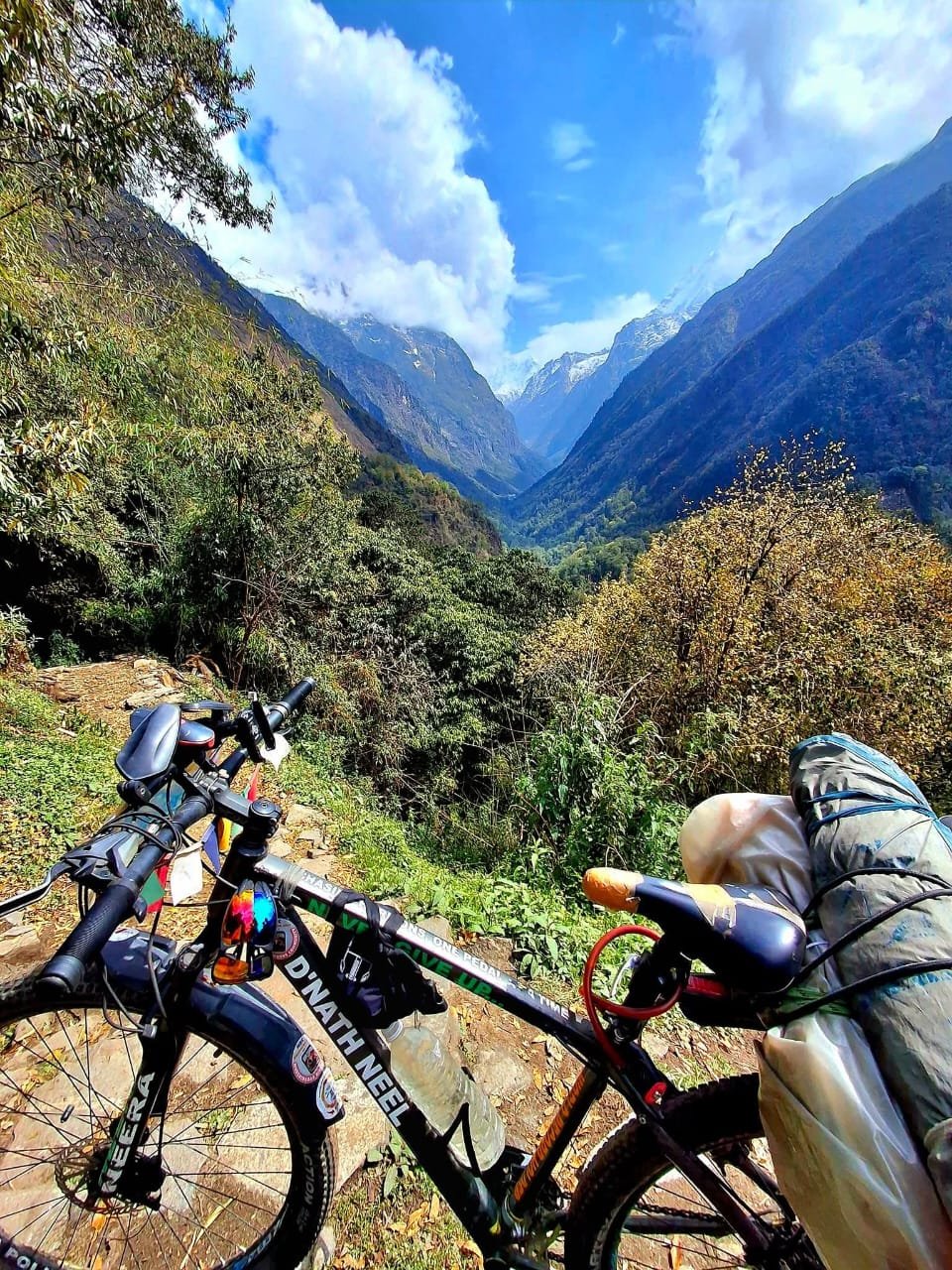
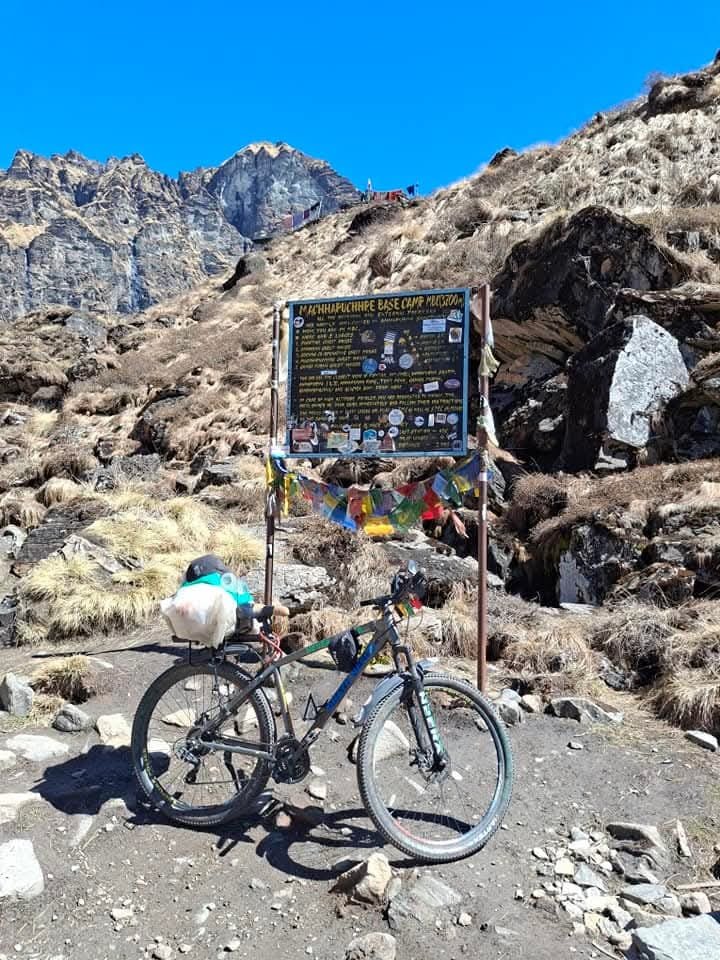
Macchapuchre Base Camp
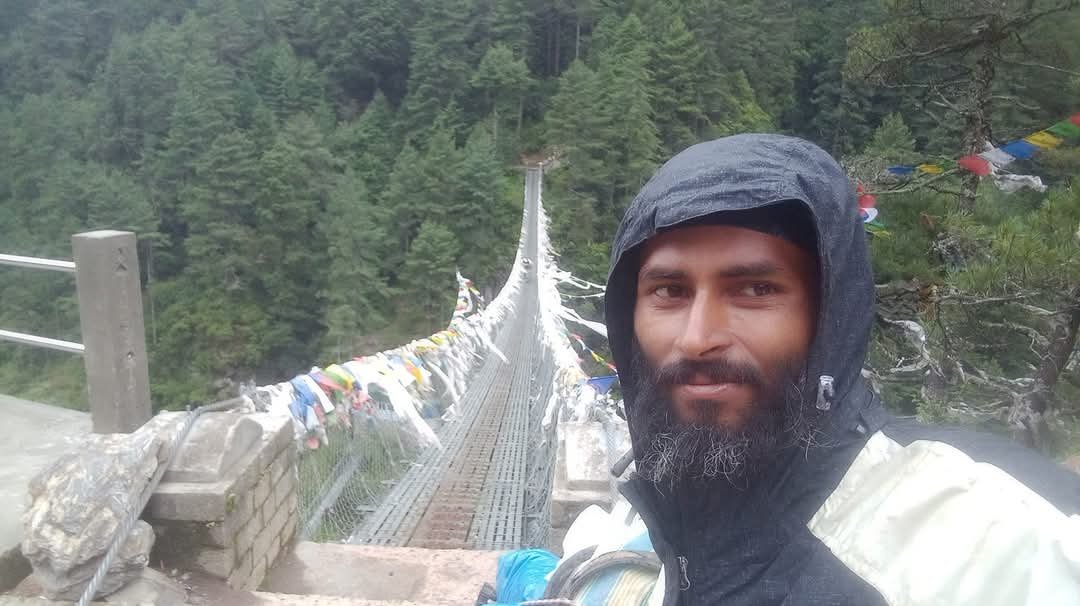
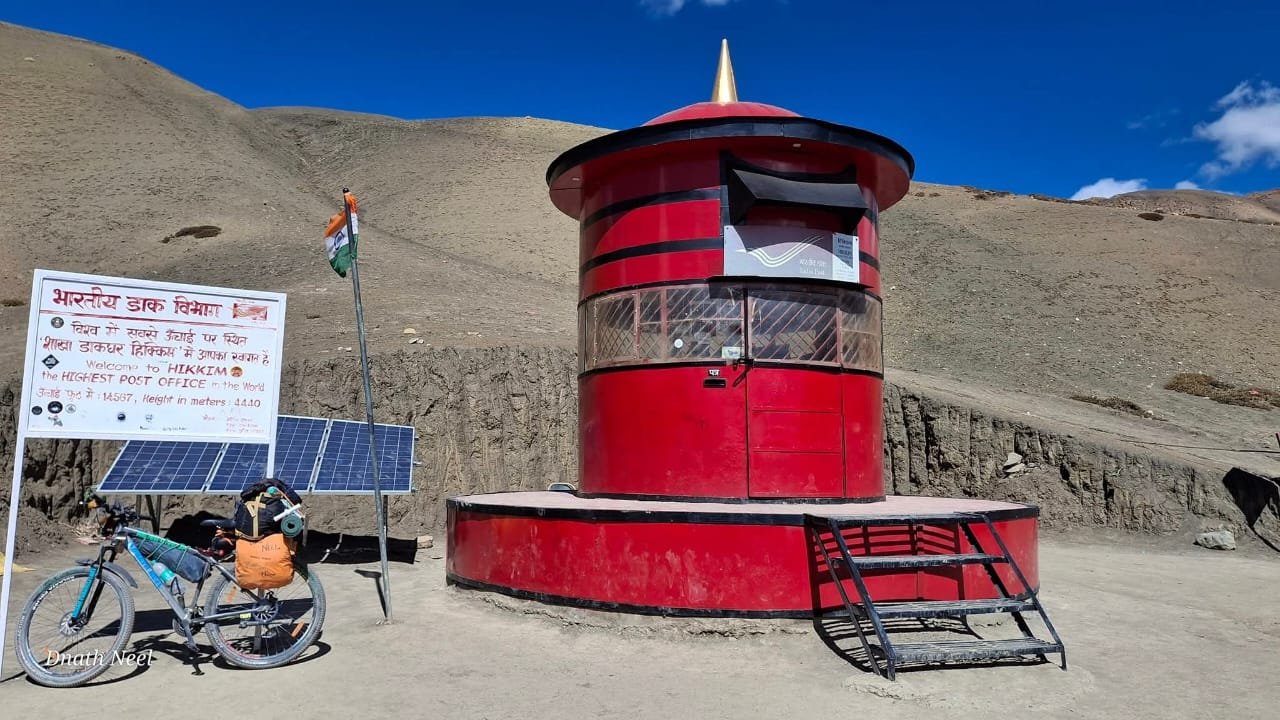
Sponsors & Supporters












Cyclist Neel (Bapi Debnath) | All rights reserved, 2026
Designed by KaruWeb